Furnace vs Air Conditioner: Complete Guide to Home Climate Control

June 12, 2026
Understanding Your Home's Climate Control Systems
Your home's comfort depends on two essential systems: your furnace for winter heating and your air conditioner for summer cooling. While they work independently, understanding how each operates, their maintenance needs, and when to repair or replace them can save you thousands of dollars and prevent uncomfortable emergencies.
The Complete Guide to Home Furnaces
How Furnaces Work
Your furnace is the heart of your home's heating system. Natural gas furnaces (the most common in Ottawa) burn fuel to create heat, which is then distributed through your home's ductwork by a blower fan. Modern high-efficiency furnaces can achieve 95-98% AFUE (Annual Fuel Utilization Efficiency), meaning nearly all the fuel energy becomes usable heat.
Types of Furnaces
- Single-Stage: On or off operation – affordable but less efficient
- Two-Stage: Low and high heat settings for better efficiency and comfort
- Modulating: Continuously adjusts output for maximum efficiency and even temperatures
Furnace Lifespan and Replacement
The average furnace lasts 15-20 years with proper maintenance. Signs you need a replacement include:
- Your furnace is over 15 years old
- Increasing energy bills despite normal usage
- Frequent repairs (especially if they're expensive)
- Uneven heating throughout your home
- Strange noises, smells, or visible corrosion
- Yellow pilot light flame (should be blue)
Furnace Efficiency Ratings
When shopping for a new furnace, look for these efficiency benchmarks:
- Standard Efficiency: 80-85% AFUE (older models)
- High Efficiency: 90-95% AFUE (minimum recommended for Ottawa)
- Premium Efficiency: 96-98.5% AFUE (best long-term value)
A high-efficiency furnace costs $1,000-$2,000 more upfront but can save $400-$600 annually on heating costs, paying for itself in 3-5 years.
Everything About Air Conditioners
How Air Conditioners Work
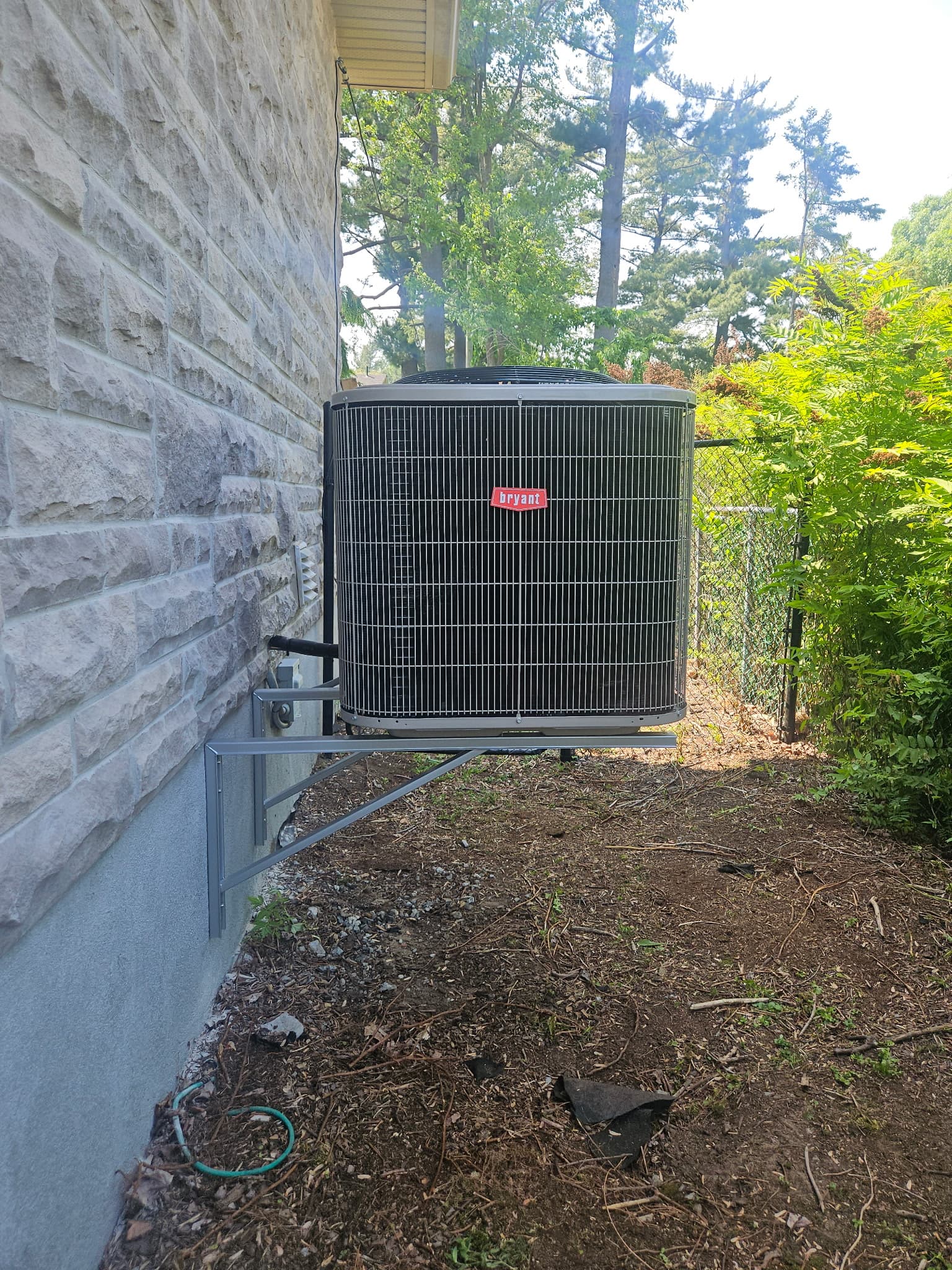
Your AC doesn't "create" cold air – it removes heat from your home and releases it outside. Refrigerant circulates between indoor and outdoor units, absorbing heat inside and releasing it outside through the compressor and condenser coil.
Types of Air Conditioning Systems
- Central AC: Whole-home cooling through existing ductwork
- Ductless Mini-Split: Individual zone cooling without ducts
- Heat Pumps: Combined heating and cooling in one system
AC Efficiency Ratings (SEER)
SEER (Seasonal Energy Efficiency Ratio) measures cooling efficiency. Higher numbers mean lower operating costs:
- Minimum Efficiency: 14 SEER (current Canadian standard)
- Good Efficiency: 16-18 SEER (recommended for most homes)
- Premium Efficiency: 20+ SEER (best for hot climates or large homes)
Upgrading from a 10 SEER unit to 16 SEER can cut your cooling costs by 38%.
When to Replace Your AC
Air conditioners typically last 12-15 years. Consider replacement if:
- Your AC is over 10 years old and needing expensive repairs
- It uses R-22 refrigerant (being phased out – very expensive to service)
- Your home isn't cooling evenly or struggling to maintain temperature
- You're hearing grinding, squealing, or loud clicking noises
- You see moisture or leaks around the unit
Essential Maintenance Tips
Furnace Maintenance Checklist
Homeowner tasks (monthly during heating season):
- Replace or clean air filter (every 1-3 months)
- Keep vents and returns unobstructed
- Listen for unusual noises
Professional maintenance (annually, before heating season):
- Clean and inspect burners and heat exchanger
- Test safety controls and gas pressure
- Lubricate moving parts and inspect belts
- Check and calibrate thermostat
- Inspect flue system and combustion chamber
- Test carbon monoxide detectors
Air Conditioner Maintenance Checklist
Homeowner tasks:
- Change air filters monthly during cooling season
- Keep outdoor unit clear of debris, plants, and obstructions (2-foot clearance)
- Gently clean outdoor coils with a garden hose (not pressure washer)
- Ensure indoor vents are open and unblocked
Professional maintenance (annually, before cooling season):
- Check refrigerant levels and test for leaks
- Clean evaporator and condenser coils
- Inspect and clean condensate drain
- Test capacitors and electrical connections
- Measure airflow and temperature differential
- Lubricate fan motors and inspect fan blades
Repair vs Replace: Making the Right Decision
Use the "50% Rule": If the repair cost exceeds 50% of the replacement cost AND your system is past 50% of its expected lifespan, replacement usually makes more financial sense.
Example: Your 12-year-old furnace (60% through its 20-year life) needs a $1,500 repair. A new furnace costs $4,000. Since $1,500 is 37.5% of replacement cost but the furnace is past 50% of its life, you're in the "gray zone" – repair could be reasonable, but replacement offers long-term peace of mind and efficiency gains.
Costs to Expect in Ottawa
New Furnace Installation: $3,500-$6,000 (varies by efficiency and size)
New AC Installation: $3,500-$5,500 (central air)
Furnace & AC Package Deal: $6,500-$10,000 (save 15-20% buying together)
Annual Maintenance: $120-$200 per system
Typical Repairs: $150-$600 (most common issues)
Energy-Saving Tips for Your HVAC System
- Install a programmable or smart thermostat: Save 10-15% on heating/cooling costs
- Keep filters clean: Dirty filters reduce efficiency by 5-15%
- Use ceiling fans: Allows you to raise AC temperature by 4°F with same comfort
- Seal duct leaks: Can improve efficiency by 20%
- Add insulation: Reduces heating/cooling load significantly
- Close curtains in summer, open in winter: Passive solar heating/cooling
- Schedule annual maintenance: Well-maintained systems use 5-10% less energy
Why Choose Professional Installation
Proper sizing and installation are critical. An oversized system cycles on/off frequently, wasting energy and failing to dehumidify properly. An undersized system runs constantly, wearing out prematurely while failing to maintain comfort.
Professional installation includes:
- Proper load calculations (not guesswork)
- Correct refrigerant charging
- Proper combustion and venting setup
- Warranty registration and protection
- Code-compliant electrical and gas connections
- System balancing and testing
Need Expert HVAC Service?
Whether you need routine maintenance, emergency repairs, or a new system installation, NorthKi has you covered. Our licensed technicians provide honest assessments, transparent pricing, and quality work backed by our 10-year warranty.
Schedule Service Today